


Community guide · Indian Wells
The Reserve: a buyer’s guide.
Quick answer
The Reserve is a private golf and residential community occupying 780 acres above The Living Desert, on the Indian Wells and Palm Desert boundary. It was developed from 1998 around the preservation of native landscape, rock formations and desert washes rather than around a conventional grid, and the golf reflects the same thinking: 21 holes rather than 18, designed by Tom Weiskopf and Jay Morrish. Golf membership is capped at 250 and the resident category is an equity membership available exclusively to homeowners. Homes range from bungalows and casitas to individually designed estates, and homesites vary from roughly a fifth of an acre to more than three quarters. Buyers choose it for privacy, mountain proximity and architectural individuality rather than for golf variety.
The Reserve at a glance
| Location | 49-400 Desert Butte Trail, Indian Wells, above The Living Desert on the Palm Desert boundary |
| Community type | Private golf and residential community |
| Developed from | 1998 |
| Size | 780 acres |
| Golf | 21 holes: an 18 hole championship course plus three practice or trophy holes |
| Course design | Tom Weiskopf and Jay Morrish. 7,021 yards, par 72, rating 73.5, slope 137 |
| Putting course | Approximately 65,000 sq ft |
| Clubhouse | Approximately 32,000 sq ft |
| Golf membership | Capped at 250. Resident category is equity and homeowners only; non resident Hawk and social categories also offered* |
| Residences | Bungalows, casitas, villas and individually designed estates, with some homesites remaining |
| Homesites | Recent sales from approximately 0.22 to 0.79 acres; current listings to 0.82 acres |
| Recent closed sales | $2,237,500 to $5,587,500, median $3,082,500, six months to August 4, 2026* |
| Recognition | Named among America’s Top 25 Private Golf Communities by Luxury Golf & Travel |
*Membership terms are set by the club and subject to change. Closed sale figures cover February 4 to August 4, 2026 and are a snapshot rather than a valuation guide.
What makes The Reserve different
Most private communities in the Valley were laid out and then landscaped. The Reserve was developed the other way round, around what was already there.
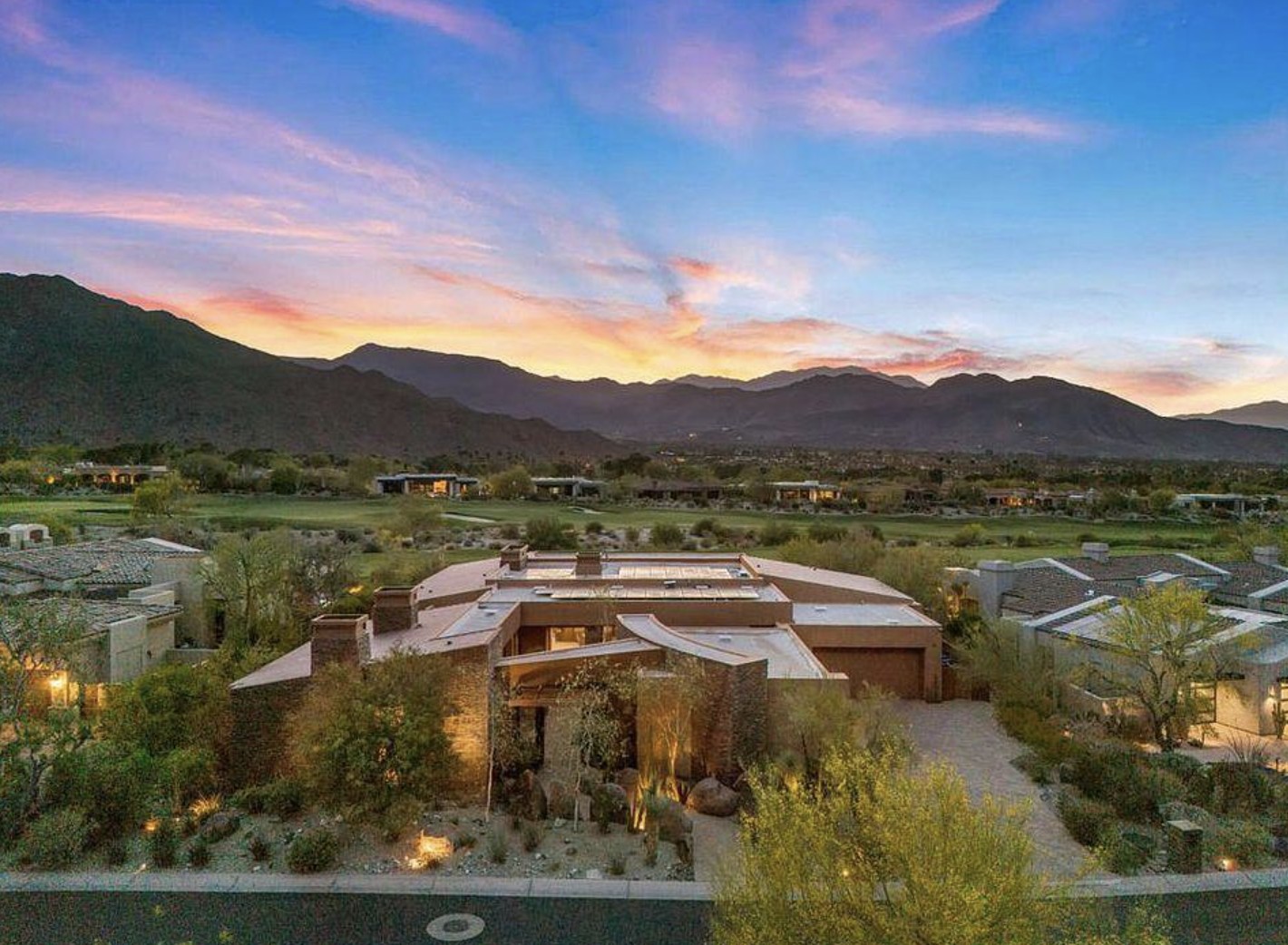
Across 780 acres against the Santa Rosa Mountains, homes were sited to work with existing terrain, rock formations and desert washes rather than against them, and the architecture was designed to recede into the landscape rather than announce itself. The street names follow the same logic: Desert Bloom Trail, Desert Arroyo Trail, Desert Bajada Trail, Hidden Valley Trail. Not a Tuscan theme applied to a grid, but names taken from the terrain the roads run through.
The golf reflects it too. Twenty one holes rather than eighteen, with three additional practice or trophy holes, and a putting course of roughly 65,000 square feet. Weiskopf and Morrish routed the course through the same landscape rather than flattening it.
And the membership cap does the rest. Two hundred and fifty golf members across 780 acres produces a very different experience from a club with two courses and several hundred more.
Current market snapshot
As of August 4, 2026, for the MLS subdivision The Reserve within Indian Wells Area 325:
| Active listings | 6 |
| Active asking range | $3,495,000 to $5,975,000 |
| Median active asking price | $4,650,000 |
| Closed sales, six months | 6 |
| Closed price range | $2,237,500 to $5,587,500 |
| Median closed price | $3,082,500 |
| Median closed price per sq ft | $881 |
| Closed home sizes | 2,498 to 5,487 sq ft |
| Closed homesites | 0.22 to 0.79 acres |
| Median sale to list ratio | 96% |
| Median days on market | 37 |
Source: GPS MLS and CRMLS, subdivision The Reserve, Indian Wells Area 325, retrieved August 4, 2026. Closed sales cover February 4 to August 4, 2026. Information is deemed reliable but is not guaranteed. Updated monthly.
Six sales against six active listings is roughly six months of supply. That is a considered market rather than a fast one, and it is what you would expect from a community of this size with a membership cap. Compare Toscana in the same city, where 22 sales against five listings produces about a month and a half.
Pricing is firm. The median sale closed at 96 percent of asking, with individual results from 90 percent to full price, after a median 37 days. Homes that are correctly positioned here do not sit.
The vintage question does not apply here
At Toscana, homes built from 2014 onward carried a 33 percent premium per square foot over the 2004 to 2010 stock and sold in half the time. That pattern also appears at The Quarry and Andalusia.
It cannot be tested at The Reserve, because every home that traded in the period was built between 1999 and 2011. There is no newer stock to compare against.
More instructive is what did achieve the highest figure per square foot: a 1999 built residence on Desert Bajada Trail, at $1,088. The lowest, at $774, was built in 2001. Two years apart, and a 40 percent difference.
At The Reserve, age is not the variable. Position and condition are.
In a community where homes were sited individually around existing terrain, two properties built within two years of one another can occupy completely different ground. That is the opposite of a master planned grid, and it is why comparable sales here need to be chosen carefully rather than averaged.
Architecture, homesites and orientation
Homes here run from bungalows and villas to substantial custom estates, but square footage alone is a poor way to compare them. The community occupies roughly 700 acres at the base of the Santa Rosa Mountains, and the land was developed around its existing canyons, rock formations, washes and changes in elevation rather than levelled into a uniform residential grid.
That makes homesite selection unusually important here.
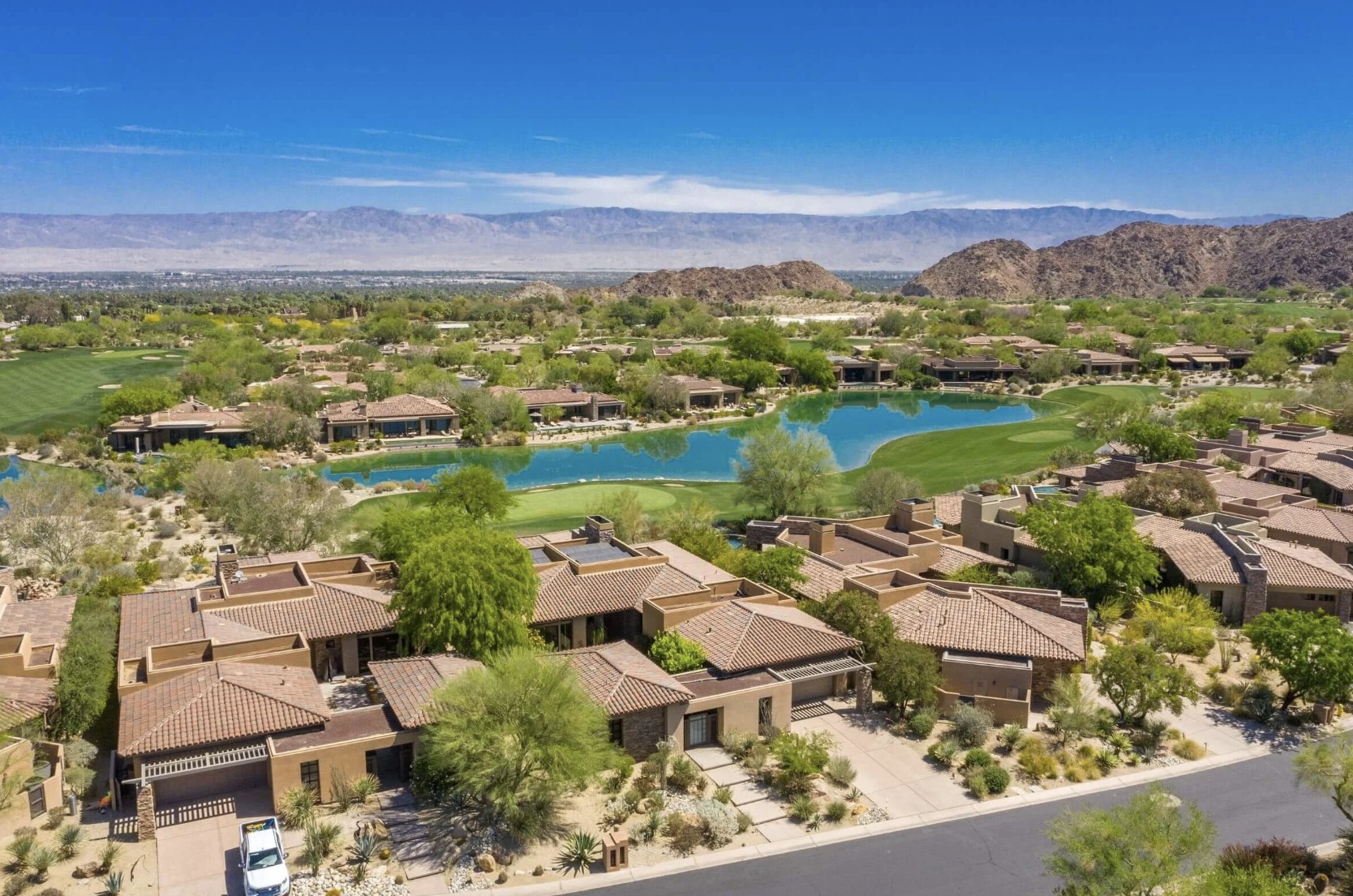
Two homes of similar age and size can live very differently depending on where they sit. Some properties are tucked close to the mountain and native rock, giving them an enclosed, private desert setting. Others open outward across fairways, water and the broader valley, trading canyon intimacy for longer sightlines and more expansive views.
What elevation changes
The elevated portions of the community are particularly compelling because the relationship between house and landscape changes. Rather than looking simply across the golf course, certain homes look over portions of it and toward multiple layers of mountain terrain. Elevated Reserve properties have historically been marketed specifically for panoramic golf, lake and mountain views, which illustrates how much elevation alters the experience of a homesite here.
Desert Bajada and Desert Arroyo
These are worth understanding individually rather than treating as interchangeable addresses.
Current inventory illustrates the distinction: larger custom residences on both streets are among the higher priced offerings inside the community, including properties above 5,000 square feet on each. Recent sales tell a similar story. A 5,136 square foot Desert Bajada residence closed at $5,587,500. A 5,487 square foot Desert Arroyo residence traded at $4,750,000.
But the street name alone does not create the premium, and we would not claim otherwise on six sales.
The order we would evaluate in
What the home looks toward. How private the outdoor living areas feel. Its elevation relative to neighbouring homes and the golf course. The quality of the immediate mountain backdrop. And only then the age of the structure.
That is why a 1999 home here can outperform a property built only a few years later on a price per square foot basis.
The flatter portions of the community create a more traditional golf community relationship between house, fairway and neighbouring residences. Homes pushed farther into the natural terrain feel quite different: more architectural, more secluded, in places almost embedded into the mountain landscape.
Neither is automatically better.
A buyer wanting broad fairway and sunset views may prefer one. A buyer prioritising privacy, rock formations and a stronger sense of desert enclosure may prefer the other. The mistake is assuming a single hierarchy exists.
One geographic wrinkle
The Reserve spans both Indian Wells and Palm Desert, although the club address and much of the community are associated with Indian Wells.
In practical terms we would not use the municipal boundary as a valuation shortcut. Within the gates, the individual homesite tells you considerably more than which side of the line the mailing address falls on. The boundary matters for property tax, city services and short term rental regulation, which are covered further down this page, rather than for what a house is worth.
What buyers should actually compare
When we compare two Reserve homes, we look past bedroom count and square footage. The questions are more specific.
- Is the home elevated or at fairway level?
- Does the primary outdoor space face open golf, mountain, water or another residence?
- Is the mountain a distant view or the physical backdrop of the property?
- Are neighbouring homes visible from the pool?
- Does the homesite capture long valley views or a more enclosed canyon setting?
Those distinctions explain pricing differences that a spreadsheet of square footage, construction year and bedroom count cannot.
The correct comparable at The Reserve is not necessarily the house built in the same year with the same square footage.
It is the house that occupies the most comparable piece of ground. That is what makes valuation here different from a more uniform master planned development, and it is why an average across six sales tells you very little about a specific address.
Membership
Golf membership is capped at 250, and the resident category is an equity membership available exclusively to homeowners. That is a meaningful distinction from most Valley clubs, where membership and ownership are separate decisions.
The club separately offers a non resident Hawk membership and social categories, which do not require ownership. For a buyer weighing The Reserve against Toscana, that is one of the clearest structural differences between them: Toscana offers resident and non resident golf categories, while The Reserve reserves its resident golf equity for owners.
Membership categories, initiation, dues, availability, waiting positions and transfer terms are set by the club, are subject to change without notice, and are not guaranteed by The McLennan Team or Desert Sotheby’s International Realty. Obtain written confirmation before making an offer.
Short term rentals
This is more complicated at The Reserve than almost anywhere else in the Valley, and the reason is the boundary. The community crosses the Indian Wells and Palm Desert line, and the two cities regulate short term rentals quite differently.
| Indian Wells | Palm Desert | |
|---|---|---|
| Definition | Minimum stay of 29 consecutive nights on new permits | A short term rental is a stay of 27 consecutive nights or fewer |
| Exception | Reduced to seven nights during the designated BNP Paribas Open period | Minimum booking of three days and two nights |
| Association | A qualifying association or common interest development may opt out of the city’s minimum stay requirement | Homes within an association require a current letter confirming rentals are permitted under its rules |
| Permit | City licence and permit required, plus compliance with the remaining operating rules | Annual permit required; eligibility depends on the property’s zoning |
The Indian Wells opt out provision is worth understanding, because it works in the association’s favour rather than the owner’s. A qualifying association can remove the 29 night minimum, but that is the association’s decision rather than an individual owner’s, and it does not remove the licensing requirement.
Three questions, and all three have to be answered before relying on rental income.
Which city governs this specific parcel. What does that city’s current ordinance permit for this zoning. And what do The Reserve’s governing documents allow, which may be more stringent than either city.
Do not assume short duration rentals are permitted. Confirm the jurisdiction of the parcel, review the current Reserve governing documents, and obtain written verification from the appropriate city and from the association.
Short term rental regulations, minimum stay requirements, permit availability, zoning eligibility and association restrictions are set by the City of Indian Wells, the City of Palm Desert and the community’s governing documents. All are subject to change without notice and none are guaranteed by The McLennan Team or Desert Sotheby’s International Realty. Verify current requirements directly before relying on rental use.
For comparison, La Quinta operates a permanent ban on most new permits outside specifically exempt areas. See short term rental eligibility in La Quinta.
Who The Reserve is right for
Buyers who want privacy, mountain proximity and architectural individuality more than golf variety or a large club social calendar. The membership cap and the 780 acres do most of the work here: it is quiet in a way a larger community cannot be.
It also suits buyers who want a house that responds to its site rather than one selected from a collection of plans. That is the trade: less predictability, more individuality, and comparable sales that require more care to interpret.
It is less suited to buyers who want two courses, extensive family programming, or the reassurance of a uniform master plan. Those buyers are usually happier at Toscana or, in La Quinta, at The Hideaway.
How The Reserve compares
| The Reserve | Toscana | The Quarry | |
|---|---|---|---|
| City | Indian Wells and Palm Desert | Indian Wells | La Quinta |
| Character | Native desert, individually sited homes | Tuscan, formally master planned | Golf first, on a former gravel quarry |
| Golf | 21 holes, Weiskopf and Morrish | Two Nicklaus Signature courses | 18 holes plus a 10 hole short course, Fazio |
| Membership | Capped at 250; resident golf is equity, owners only | Resident and non resident categories | Ownership not required |
| Median closed price | $3,082,500 | $4,025,000 | $4,362,500 |
| Months of supply | About 6 | About 1.4 | About 1.5 |
The Reserve and Toscana figures retrieved August 4, 2026. The Quarry figures retrieved July 31, 2026.
For the full three way comparison with Indian Wells Country Club, see the Toscana guide.
Read the full guides: The Madison Club · The Hideaway · Tradition Golf Club · PGA WEST · The Quarry · Andalusia · Toscana · The Thermal Club · all community guides
Frequently asked questions
Do you have to own a home at The Reserve to be a member?
For resident golf membership, yes. The Reserve's resident golf membership is an equity membership available exclusively to homeowners. The club separately offers a non resident Hawk membership and social categories, which do not require ownership. Golf membership is capped at 250. Confirm current availability, categories and terms directly with the club.
What do homes cost at The Reserve?
Over the six months to August 4, 2026, six homes closed between $2,237,500 and $5,587,500, with a median closed price of $3,082,500 and a median of $881 per square foot. As of that date there were six active listings asking between $3,495,000 and $5,975,000, with a median asking price of $4,650,000.
What is the golf like?
Twenty one holes rather than the conventional eighteen: a Tom Weiskopf and Jay Morrish designed championship course playing 7,021 yards to a par of 72, with a slope of 137, supplemented by three practice or trophy holes. There is also a putting course of roughly 65,000 square feet. Weiskopf also designed the Weiskopf Private course at PGA WEST, so a buyer familiar with one will recognize the other.
Is The Reserve in Indian Wells or Palm Desert?
Both, in practice. The club sits above The Living Desert on the Indian Wells and Palm Desert boundary, and recent sales include addresses in each city. That matters for property tax rates, city services and short term rental regulation, all of which are set by the city the parcel falls in rather than by the club.
How large are the homesites?
They vary considerably, which is unusual for a master planned community. Recent sales ranged from roughly 0.22 to 0.79 acres, and current listings run to 0.82 acres. That range reflects the development philosophy: rather than a uniform grid, homes were sited around existing terrain, rock formations and desert washes.
Are short term rentals allowed at The Reserve?
It depends on which city governs the specific parcel, because the community crosses the Indian Wells and Palm Desert boundary and the two regulate differently. In Indian Wells, new permits generally require a minimum stay of 29 consecutive nights, reduced to seven during the designated BNP Paribas Open period, and a qualifying association may opt out of the minimum stay requirement though the licensing requirement remains. Palm Desert defines a short term rental as 27 consecutive nights or fewer, requires an annual permit, sets a minimum booking of three days and two nights, and requires homes within an association to hold a current letter confirming rentals are permitted under its rules. Separately, The Reserve may impose restrictions more stringent than either city. Confirm the parcel’s jurisdiction, the city’s current ordinance and the community’s governing documents in writing before relying on rental income.
How does The Reserve compare to Toscana?
They solve different problems. Toscana is larger, more formally planned, and offers two Jack Nicklaus Signature courses with resident and non resident membership. The Reserve is more intimate and topographically dramatic, developed across 780 acres around the preservation of native landscape, with a 21 hole Weiskopf and Morrish course and golf membership capped at 250. Buyers generally choose The Reserve for privacy, mountain proximity and architectural individuality rather than golf variety.
Buying or selling at The Reserve
Comparable sales need particular care here. In a community where homes were sited individually around existing terrain, two properties of similar size and vintage can occupy completely different ground, and an average across six sales tells you very little about a specific address.
Laurie McLennan has spent decades advising buyers and sellers throughout the Coachella Valley, including clients evaluating the Indian Wells private clubs. Three generations of Realtors sit behind that experience, and a desert connection dating to 1960.
Last updated: August 4, 2026
Written by Laurie McLennan, Founder, The McLennan Team at Desert Sotheby’s International Realty
California DRE #01424382 · Market figures from GPS MLS and CRMLS, retrieved August 4, 2026
Club membership terms, fees, dues and rules are set by The Reserve Club. Short term rental regulations are set by the city governing the individual parcel and by the community’s governing documents. All are subject to change without notice, are not guaranteed by The McLennan Team or Desert Sotheby’s International Realty, and should be confirmed in writing before any purchase decision. This page is informational and is not legal, financial or tax advice.