The Hideaway or The Citrus? The Decision Is Not Really About Golf
Same La Quinta Budget. Two Completely Different Lives.
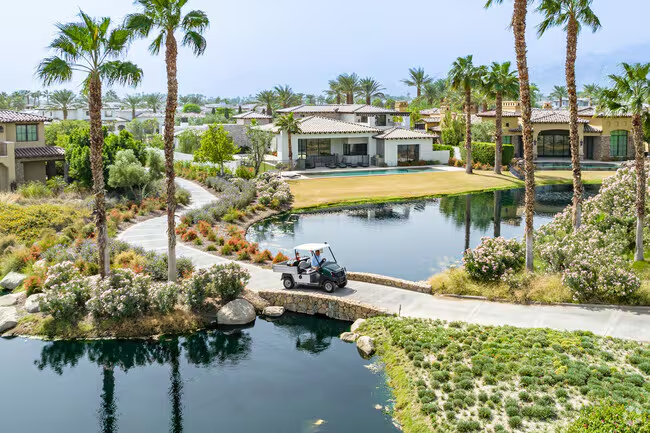
Two buyers came to us this season with nearly identical budgets. One bought at The Hideaway. One bought at The Citrus. Neither made a mistake.
They were not buying the same thing, and that is the whole article.
The short answer
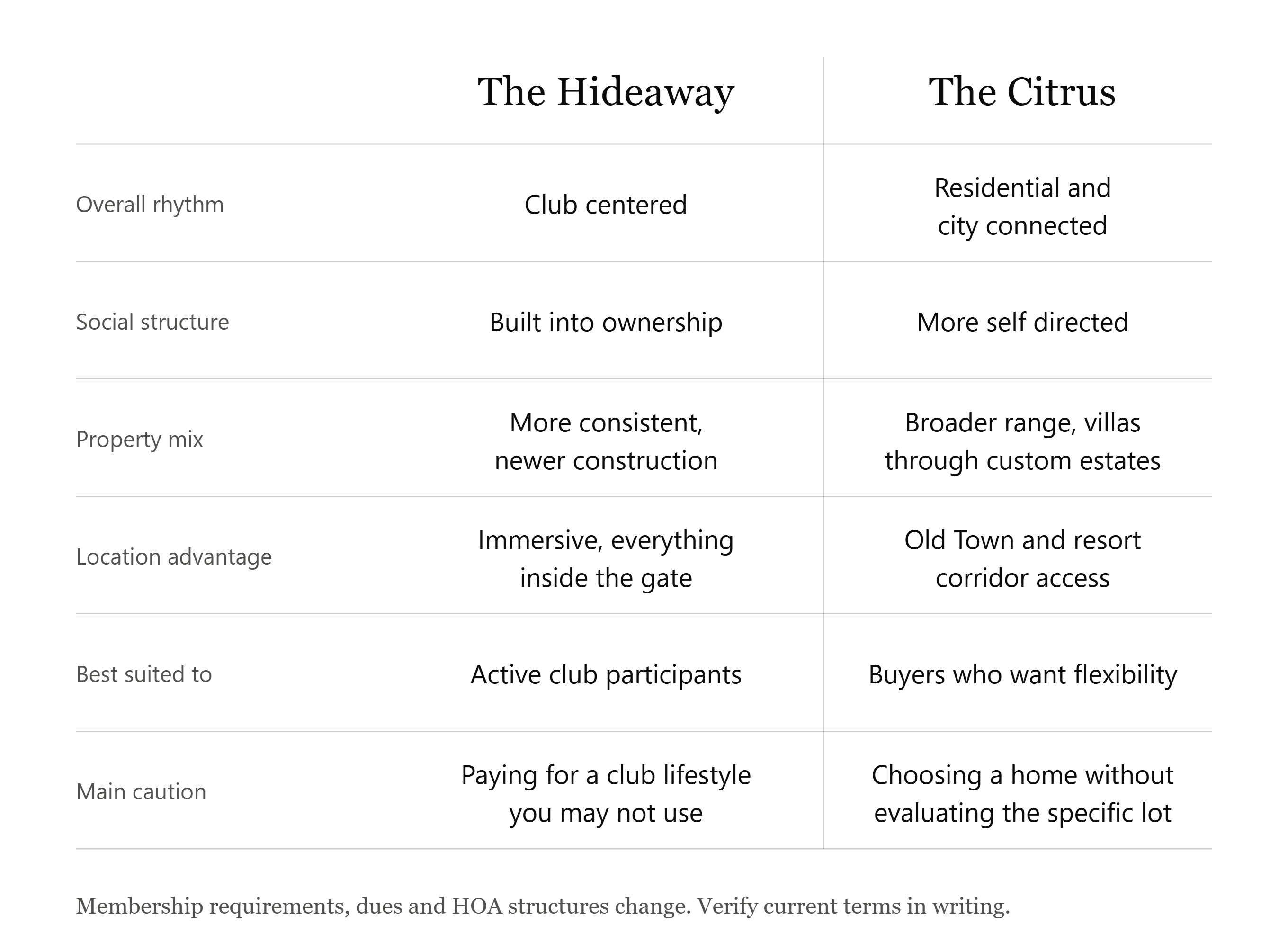
The Hideaway generally suits buyers who want club life built into their ownership. The club is the organizing structure of the week, and buyers who want that structure tend to be very happy with it.
The Citrus generally suits buyers who want the home to connect them to the broader La Quinta lifestyle. Club access is available, the location sits closer to Old Town, and the rhythm is more self directed.
Everything below is about which of those two sentences describes you. The deciding variable is not amenities. It is how many nights you will actually be here, how much social structure you want, and whether privacy is a preference or the point.
The comparison at a glance
A brief orientation
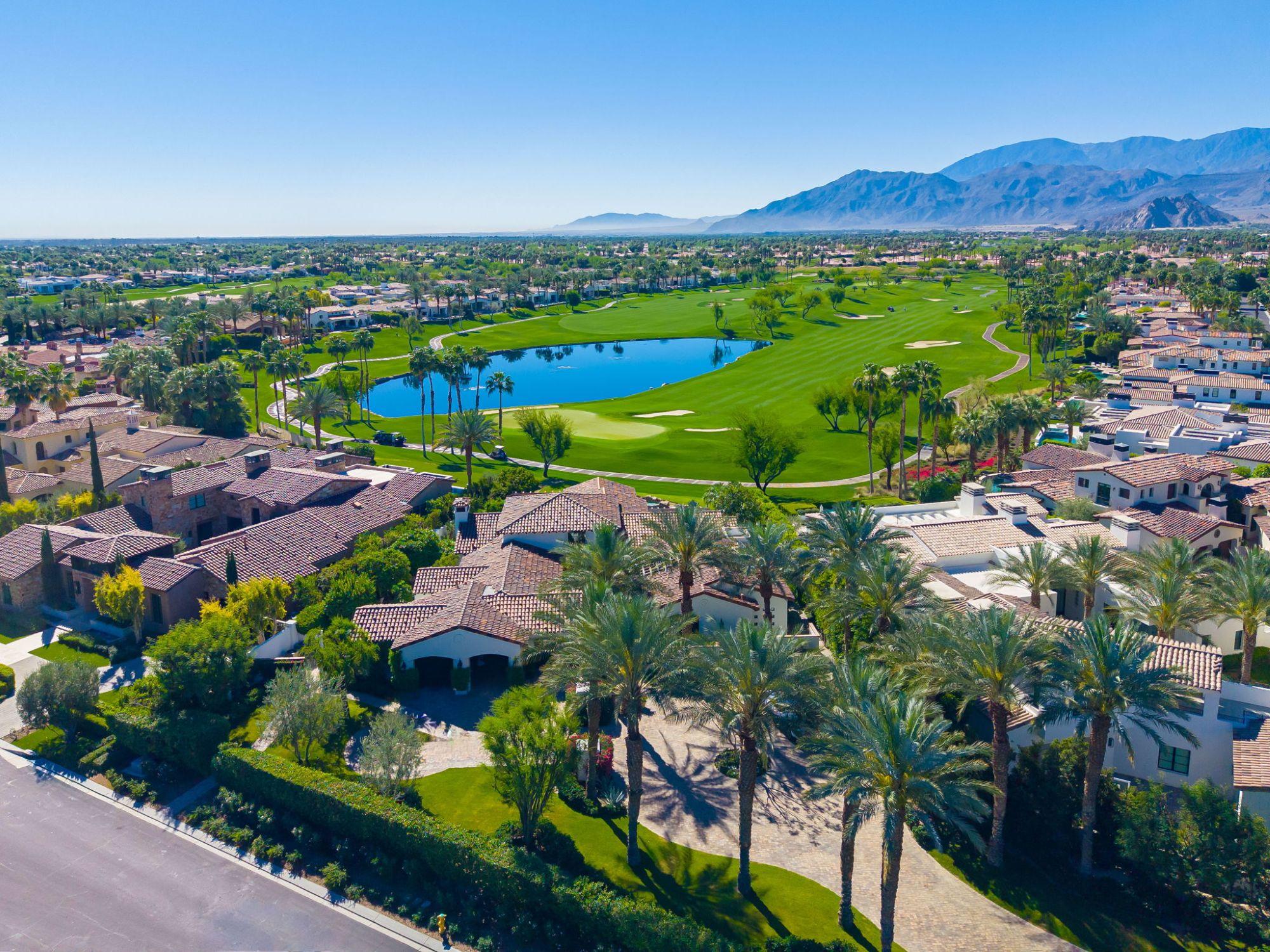
The Hideaway is a private club community developed beginning in the early 2000s, built around golf and a substantial club and dining program. The homes are generally newer, the architecture follows a consistent vocabulary, and the club is central to how the community operates day to day. Buyers here are typically buying into a club experience as much as a house.
The Citrus is a gated community closer to Old Town La Quinta and the resort corridor, established roughly a decade earlier. It offers a broader range of home types, from attached and villa style properties through semi custom homes and larger custom estates, with a golf club available to those who want it. The relationship between homeownership and membership has historically been structured differently here.
Both are gated. Both are golf communities. That is roughly where the useful similarities end.
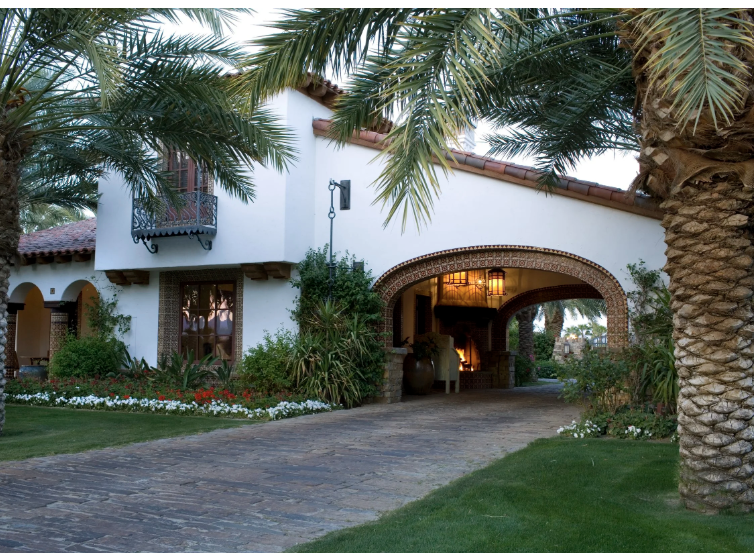

If you will be here six long weekends a year
Your real enemy is friction, and it is an expensive enemy, because you pay it six times a year instead of spreading it across a long season.
That makes the important questions unglamorous. Can this house genuinely be locked and left? How close is dinner when the window is seventy two hours? And the one people avoid: what do annual club costs look like divided by six weekends?
That last question is not a criticism of club life. Plenty of low frequency owners run the math and love the answer, because the club is precisely why they came. It should be a conscious decision, not a discovery in year two.
The Citrus tends to give a low frequency owner more shots at the right property type, because the range of home sizes is wider and true lock and leave options are easier to find. The Old Town proximity also compresses more value into a short trip than most buyers expect. At The Hideaway the same outcome is achievable, but it depends more heavily on selecting the right individual home.
The read: if the club is why you are coming, six weekends does not disqualify The Hideaway. If the club is incidental, the Citrus profile usually wears better on a low frequency schedule.
WHAT WE SEE BUYERS UNDERESTIMATE Buyers compare square footage before they compare lot position. In both communities we would usually take the smaller home with better setback, orientation and mature landscaping over the larger home exposed to a cart path. The larger home photographs better. The smaller one is more pleasant to own, and it tends to have an easier conversation with the next buyer.
If you will be here from November to March
Everything inverts. Costs that felt disproportionate across six weekends become reasonable across a hundred and twenty days of daily use.
More importantly, the thing you will need most is the thing amenity lists never explain: a way to meet people. That is the real function of a club centered community, and it is underrated. Structure produces relationships. Standing games, member events, a dining room where the staff knows your order by week three. If you are new to the valley, that shortens the distance between arriving and belonging, which is genuinely the hardest part of a first season.
The Citrus supports an extended season differently. Club life is available, but the community has a more residential texture, and proximity to Old Town means the week can be built around the city rather than around one clubhouse. If you already have friends here, or play at several clubs, that independence is a feature rather than a compromise.
There is also an expectations question worth naming. In a strongly club centered community, low participation can feel conspicuous. Buyers who intend to participate never notice it. Buyers who intend to opt out sometimes do.
The read: if you want the season handed to you already assembled, a club centered community delivers that better. If you want to build the season yourself and keep the home as a base rather than a hub, the more residential option holds up better across four months.
If privacy and long term appeal come first
Start with the thing most buyers underweight. At this level, privacy is a property trait far more than a community trait.
Both communities contain homes with excellent privacy and homes with very little of it. Lot orientation, setbacks, whether you sit on a fairway or behind one, mature landscaping, elevation, how the driveway approaches the house. Those decide your daily experience. The name on the gate does not. We have watched buyers eliminate an entire community over a privacy concern that was really a comment about three specific homes they happened to see.
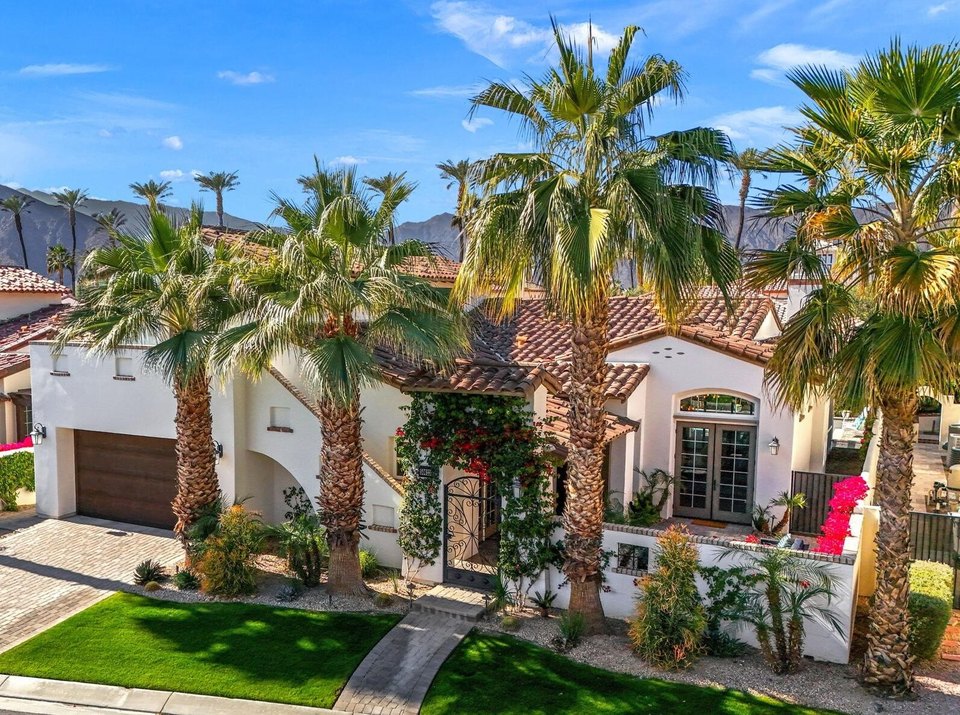
The older landscape at The Citrus produces a settled quality that new construction cannot buy. Mature trees do something money does not shortcut. The Hideaway's architectural consistency and newer housing stock produce a different appeal, more cohesive and more contemporary, and buyers who value that tend to value it strongly.
On long term desirability, buyers in this market are discerning about lot position and privacy, and homes that get those right tend to be received well when they come back to market. That is a general observation rather than a prediction about your property, and no one can responsibly promise you appreciation.
The read: the community narrows your list. The specific lot decides whether you were right.
WHAT WE EXAMINE DURING A SHOWING Where the sun lands on the primary outdoor space at four in the afternoon in February. What is visible from the primary bedroom and the main seating area, not from the entry. How close the nearest cart path or shared walkway runs, and whether landscaping actually screens it or just softens it. Which direction the driveway approaches from, and who sees you arrive. How the house sounds with the doors open.
WHERE THE WRONG PROPERTY UNDERMINES THE RIGHT COMMUNITY A club centered community only works if you use the club. A lock and leave community only works if the specific home is actually lock and leave. And a private community stops being private the moment your primary living space faces a green complex. In every one of those cases the community was the right call and the house was not.

The questions to ask before you choose
- How many nights will you realistically be here in year one? In year three?
- Do you want your social life organized around a club, or built by you?
- Is membership essential, genuinely appealing, or something you would tolerate?
- How much does quick access to Old Town, dining and the rest of La Quinta matter?
- Do you need true lock and leave, or are you comfortable managing remotely?
- How will your use of this home change in five to ten years? It usually does.
- Have you obtained current membership requirements, initiation terms, annual dues, minimums, HOA fees and transfer terms in writing?
That last one is not optional. These structures change, and the version you read online is frequently out of date.
Our perspective

Buyers almost always start with community names, arriving with a shortlist of two or three after reading the same pages everyone else read.
The good decisions get made a step later, when the conversation moves from communities to lifestyles, and then from lifestyles to four or five actual homes. That is usually when someone realizes the community they were most excited about is built for a version of their life they are not living, or that the community they nearly dismissed contains exactly the right house on the right street.
Our job at that stage is narrowing, not showing. We would rather spend an hour helping you eliminate half the market than three days driving you through it.
Five frequently asked questions
1. What is the main difference between The Hideaway and The Citrus in La Quinta? The Hideaway generally suits buyers who want club life built into their ownership, with golf, dining and programming central to daily life. The Citrus, established roughly a decade earlier and located nearer Old Town La Quinta, offers a broader range of home types and a more residential rhythm with club access available. The practical difference is how central the club is to the ownership experience. Verify current membership structures directly.
2. Which La Quinta community is better for a seasonal resident who stays several months? It depends on whether you want your social life built for you or built by you. A club centered community shortens the path to a full calendar and standing games, which matters most if you are new to the valley. A community with more residential texture and closer proximity to Old Town suits buyers who already have a network here or prefer a wider orbit than one clubhouse.
3. Is club membership required when you buy in these communities? Membership requirements differ by community and change over time. Some La Quinta communities tie membership to home purchase, others make it optional or separate, and terms including initiation, annual dues and minimums vary. Request current terms in writing from the club before you write an offer.
4. Which La Quinta community is best for a lock and leave second home? Lock and leave is a property characteristic more than a community characteristic. Look for a manageable footprint, low maintenance landscaping, straightforward systems and reliable property management access. Communities with a wider range of home types, including villas and attached homes, generally give a low frequency owner more options that fit.
5. How do I choose a La Quinta community if I am buying a second home? Start with usage, not amenities. Estimate the nights you will realistically spend here, decide how much social structure you want, and be honest about how much privacy matters. Those three answers eliminate most of the market. Then compare individual homes, because lot position and privacy vary enormously within every community.
________________________________________________________________
This article is part of our La Quinta Community Match series. Next: PGA West vs The Citrus, Andalusia vs The Hideaway, and where a given budget feels most compelling across La Quinta.
If you are weighing these two communities, or any of La Quinta's other gated communities, we are glad to talk it through. No tour required, and no obligation to look at anything.
Reach us through the contact page, or on Instagram at @wearedesertluxury.
The McLennan Team is committed to the Fair Housing Act and the Equal Opportunity Act. All community descriptions here refer to lifestyle, amenities and physical characteristics only. We do not describe communities in terms of race, color, religion, sex, familial status, national origin, disability or any other protected characteristic. Information regarding HOA fees, club membership requirements, initiation structures, annual dues, minimums, availability and property details is subject to change and is not guaranteed. Buyers should independently verify all information directly with the relevant HOA, club and other authorized sources.