PGA West: The Western Home of Golf
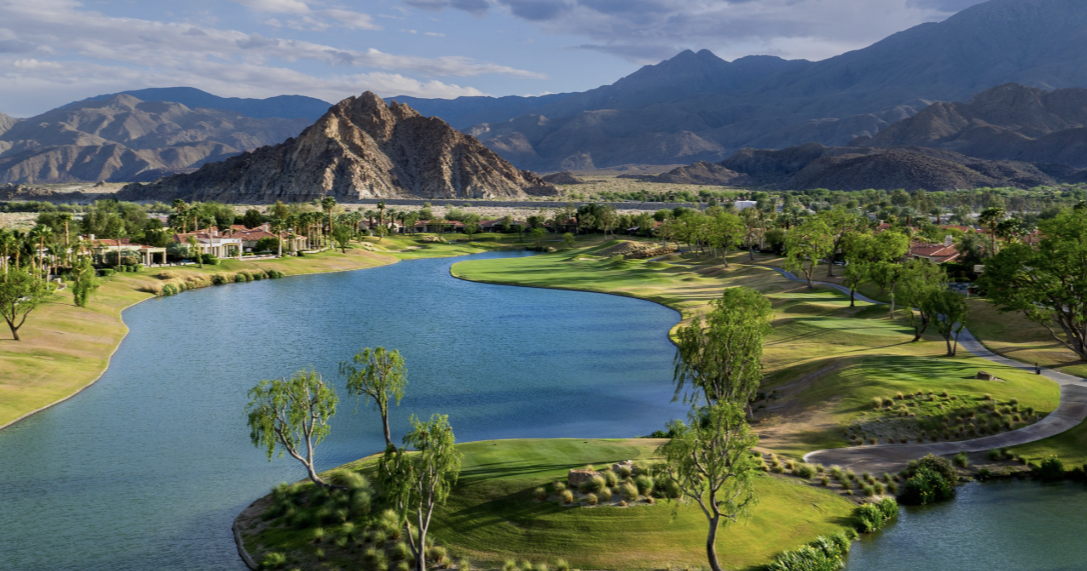
Ask a serious golfer where they'd build a dream community, and more often than not, the answer looks like PGA West. For more than three decades, this 2,200 acre enclave in La Quinta has carried the title "Western Home of Golf in America™," and earned every letter of it. Nine championship courses. Five clubhouses. Two private clubs. A roster of architects that reads like a hall of fame: Pete Dye, Jack Nicklaus, Arnold Palmer, Tom Weiskopf, Greg Norman.
But golf was never the whole story. PGA West is a real, lived in residential community, gated, guarded, and woven through with more than a dozen distinct neighborhoods, each with its own architecture, price point, and character. Some buyers come for tournament caliber golf. Others come for the privacy, the climate, the social calendar, or simply because La Quinta has quietly become one of the most coveted small cities in the desert. Most come for some combination of all of it.
What follows is the guide we wish every buyer had before their first tour, built by a team that has sold and lived in this market for years, not assembled from a template.
How PGA West Became the Western Home of Golf

PGA West broke ground in 1984, at a moment when La Quinta was still a quiet outpost next to its better known desert neighbors. From the outset, it was conceived as something larger than a golf course community: a destination resort with residential living built directly into the experience.
The Pete Dye Stadium Course announced what the community would become, widely regarded as one of the most demanding and theatrical courses in American golf, a longtime host of PGA Tour Qualifying and, for years, a rotation stop in the Bob Hope Classic, now The American Express. That tournament pedigree is part of why PGA West carries weight no newer golf community can simply manufacture. Presidents, touring professionals, and Hollywood royalty have all walked these fairways.
Over the decades that followed, PGA West grew into the nine course resort it is today, a mix of resort access layouts and ultra private courses reserved for members. It holds a distinction no other private club in the world can claim: two of its courses, the Pete Dye Stadium Course and the Tom Weiskopf Private Course, are ranked among Golf Magazine's 100 Greatest Courses in the World.
Today the golf side of PGA West is owned and operated by a joint venture between Century Golf Partners and Hankuk Industry, while the residential community is governed independently through its own homeowner associations, a distinction that matters more than most buyers expect, and one we'll come back to.
Life Inside the Gates

Pass through the gates and the rhythm of PGA West makes itself known quickly: golf carts at sunrise, lap swimmers ahead of the heat, tennis and pickleball courts booked solid by mid morning in season, a clubhouse calendar that runs from January wine dinners to summer poolside gatherings.
Ask residents what surprised them most about living here, and the same answer tends to come back: how social it is. Wine dinners, themed clubhouse events, golf leagues, racquet tournaments. The programming is dense enough that it's genuinely possible to build a full social life without ever leaving the community. For full timers and seasonal "half backs" alike, that built in social infrastructure is often the deciding factor over comparable golf communities elsewhere in the valley.
It is also a community that scales to however someone wants to live. A young professional in a Nicklaus Tournament condo experiences a different rhythm than a full time resident in a custom estate behind a private gate, but both share the same nine course legacy, and both sit minutes from Old Town La Quinta's restaurants, weekly farmers market, and boutique shopping.
Beyond the gates, the case only strengthens. Eldorado Polo Club is minutes away, where Sunday matches and tailgating have become a cherished seasonal ritual. So is the Desert International Horse Park in Thermal, one of the largest equestrian facilities in North America, hosting roughly fifteen weeks of hunter/jumper and dressage competition each season from October through March. For anyone with ties to equestrian sport, that proximity is a quiet but meaningful draw.
Club Membership: What Every Buyer Should Understand First
This is the part of PGA West most new buyers misread, so it deserves to be said plainly: owning a home here does not automatically come with club membership or course access. HOA dues and club membership are two entirely separate commitments, and conflating them is the single most common mistake we see before a buyer tours with someone who actually knows the community.
Two clubs, two experiences.
The Club at PGA WEST® opens access to six championship courses on the main property, three clubhouses, a Sports Club, tennis and pickleball, a dedicated dog park, and the full social and dining calendar.
The Citrus Club is smaller and more intimate, set among citrus groves, with its own three courses and access to the historic La Quinta Resort & Club's amenities and dining.
Membership, in broad strokes. A Champions or Social membership opens the Sports Club, dining, racquet sports, and the social calendar, without unlimited golf, ideal for residents who value the lifestyle more than tee times. A Golf membership through The Club at PGA WEST adds unlimited play across the six courses on top of those same social privileges. At the top sits the Desert or Distinguished Desert membership, which combines both clubs entirely: all nine courses, La Quinta Resort & Club amenities, priority tee times, concierge service, and Desert Member events. Pricing for each tier isn't published; the club provides it directly on request, which is worth setting expectations around early.
The distinction that matters most: it is entirely possible, and common, to own at PGA West, pay HOA dues, and never join the club at all, while still enjoying the gated security and prestige of the address. Plenty of residents are content with public or resort access rounds, or no golf at all. Membership is an optional layer on top of ownership, not a requirement of it. For buyers who do want golf, matching the tier to actual usage, a handful of rounds a season versus golf as a daily ritual, is the difference between real value and overpaying.
HOA Dues: What They Cover and What They Don't
PGA West is governed in layers: a Master Association overseeing the full 2,200 acres, and individual sub association HOAs governing each gated neighborhood within it.
The Master Association handles security and gate operations across roughly fifteen entry points, landscaping along the perimeter and main boulevards, and coordination with the city and utilities as the community has grown.
Sub community HOAs handle the rest: landscaping, architectural standards, and road and pool maintenance within each neighborhood, and in many condo associations, exterior maintenance, roofing, earthquake insurance, and cable or internet, all bundled into a single monthly figure.
What's worth underlining: no portion of HOA dues funds golf course operations. The courses, clubhouses, and club amenities sit entirely outside the HOA structure, owned and run by a separate private company. A buyer can own at PGA West and pay HOA dues without contributing a cent toward the courses, and club membership, if chosen, is billed entirely separately.
The practical takeaway for any buyer: look closely at the specific sub association's dues and what they actually cover, decide whether club membership belongs in the budget, and price that tier separately from the HOA line. We pull current HOA documents and CC&Rs for every PGA West listing. Ask us for the breakdown on any specific neighborhood.
The Neighborhoods: A Portfolio, Not One Product
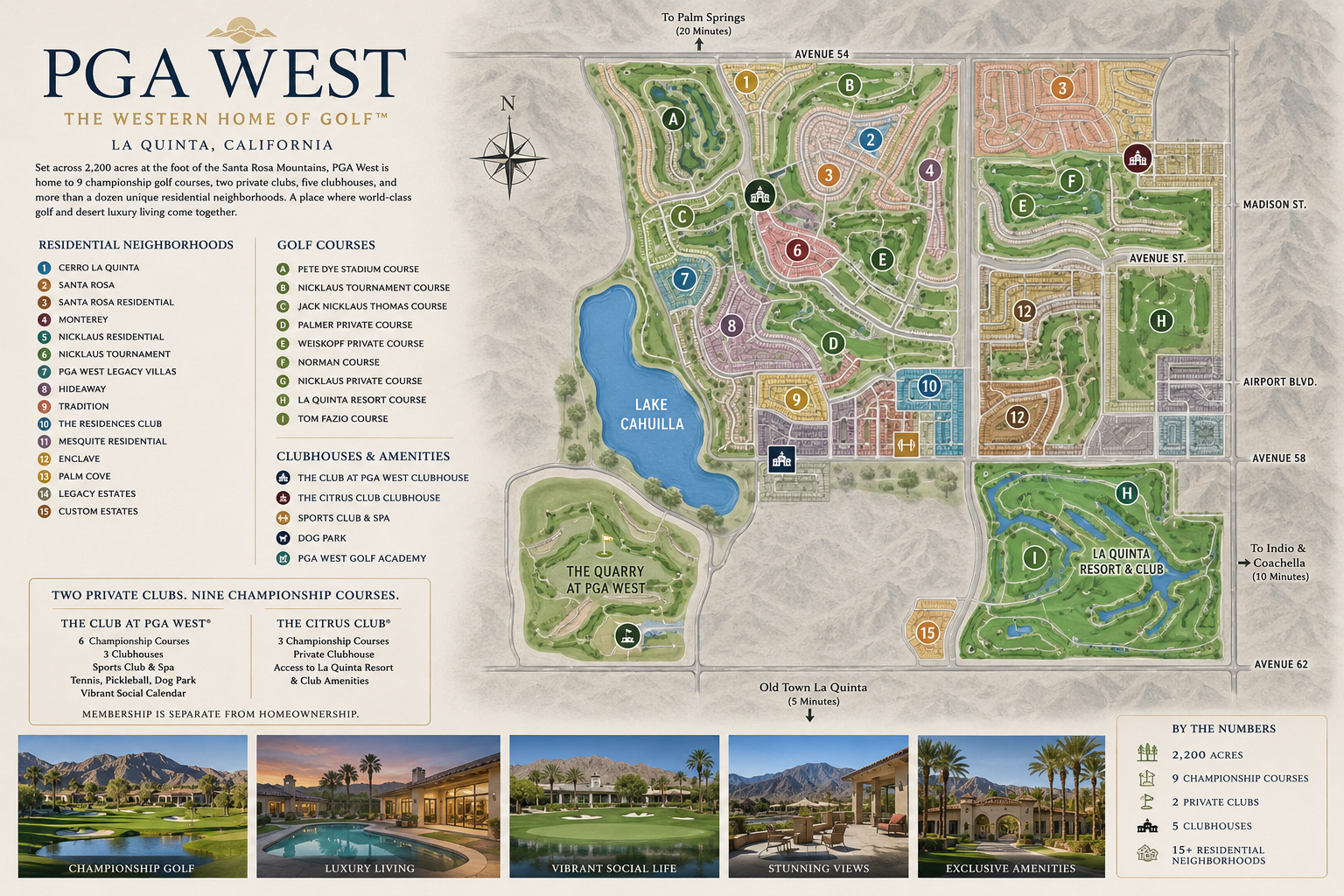
PGA West isn't a single offering. It's a collection of distinct neighborhoods, each with its own floor plan library, price point, and architectural identity.
PGA Nicklaus Tournament offers condominium living along the Jack Nicklaus Tournament Course, with floor plans generally between 1,288 and 2,655 square feet and 2 to 3 bedrooms, often sold turnkey furnished. For many buyers, this is the most accessible entry point into PGA West.
PGA Stadium pairs attached and detached homes with the legendary Pete Dye Stadium Course, from cozy 1,600 square foot condos to larger detached layouts.
Signature at PGA WEST is a gated subdivision of detached single family homes, generally 1,700 to 2,200 square feet, with more contemporary finishes appearing in recently updated inventory.
Tanglewood, Inverness Way, Laurel Valley, Southern Hills, and Champions Way span a wide range of attached and semi attached condominiums, roughly 1,300 to 3,600 square feet, many positioned directly on fairway frontage.
And within custom estate enclaves, including gated pockets like Peninsula Park, buyers find larger, often custom built luxury homes on premium course and mountain view lots.
Choosing among them really comes down to lifestyle priorities first: turnkey, low maintenance condo living versus a custom estate; fairway frontage versus an interior lot; full time residence versus seasonal escape.
The Golf: Nine Courses, Two World Ranked Layouts
PGA West's golf portfolio is, simply, unmatched in the region.
Among the resort and member access courses, the Pete Dye Stadium Course remains the signature, famously demanding, dramatic, and one of two PGA West courses ranked among Golf Magazine's 100 Greatest Courses in the World, with a long history hosting PGA Tour Qualifying and Bob Hope Classic/American Express rotation play. Alongside it sit the Pete Dye Mountain and Dunes courses, the Jack Nicklaus Tournament Course, long associated with American Express tournament week, and the Greg Norman Course.
The private, member only side includes the Arnold Palmer Private Course, whose clubhouse overlooks its 18th green, the Jack Nicklaus Private Course, and the Tom Weiskopf Private Course, PGA West's second world ranked layout.
Through Desert or Distinguished Desert membership, residents also gain the Citrus Club's three courses, Citrus, Mountain, and Dunes, set among fragrant citrus groves with mountain, lake, and fairway views, plus access to the historic La Quinta Resort & Club.
For a golfer with full membership access, the appeal is simple: a different championship designed course every day of the week, with courses to spare the week after.
Where to Eat
Dining at PGA West splits between member exclusive clubhouse venues and the wider Old Town La Quinta scene just minutes away.
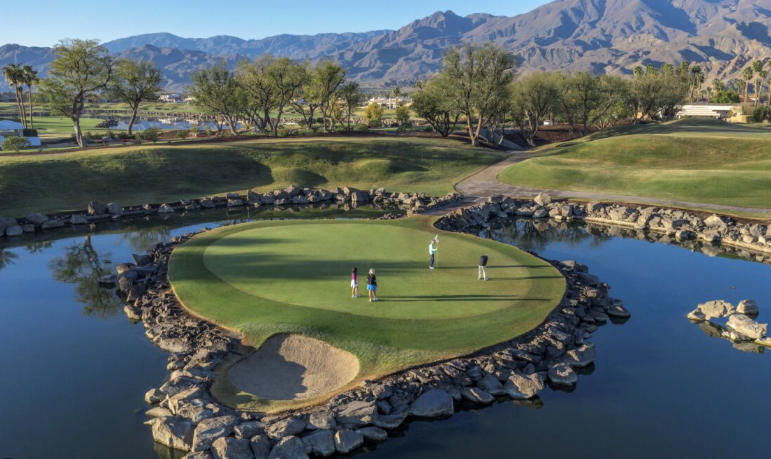
Inside the gates, Ernie's, set within the Stadium clubhouse, looks out over the Stadium and Nicklaus Tournament courses and handles everything from casual lunches to large banquets. Wallaby's West brings an Australian ranch style sensibility, with indoor dining and a veranda overlooking the course. And The Private Clubhouse at the Palmer Course is the most exclusive setting on property, with floor to ceiling mountain views over the 18th green and event space that scales from intimate dinners to gatherings of 450. Citrus Club members also have access to dining at the historic La Quinta Resort & Club.
Just outside the gates, a five to ten minute drive into Old Town La Quinta opens onto one of the desert's most beloved dining strips: chef driven restaurants, wine bars, and patio seating worth a guide of its own.
The Market, in Numbers
PGA West's pricing spectrum is genuinely wide, which is part of what makes the community accessible to such a broad range of buyers. Entry level condos in PGA Nicklaus Tournament (2 bed/2 bath, roughly 1,288 to 1,330 square feet) are currently trading in the high $400,000s to high $600,000s. Mid tier condos and attached homes, 2,100 to 2,700 square feet, 3 bed/2 to 3 bath, generally land between $1.0 and $1.3 million. Detached single family homes in Signature, Tanglewood, and similar gated neighborhoods range broadly from the high $500,000s into the $1.7 million plus range, depending on lot, view, and finish. Custom estates in PGA West's most exclusive enclaves extend well beyond that, with premium course frontage and mountain view lots commanding the top of the market.
Citywide, La Quinta has seen inventory expand and days on market lengthen over the past year, and PGA West tracks closely with that broader trend: more selection, longer marketing times on overpriced listings, and continued strong absorption on homes priced accurately for their neighborhood and view corridor.
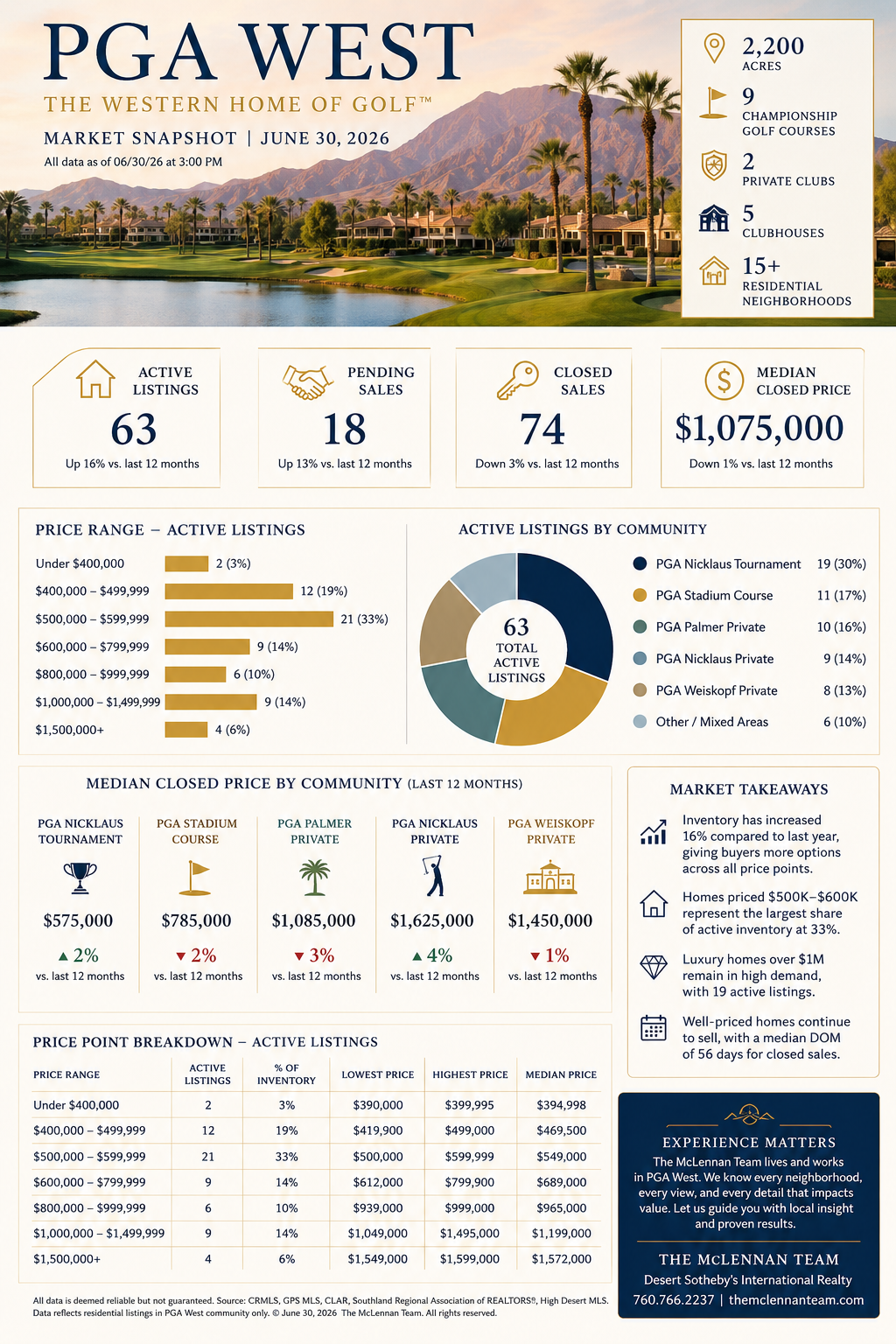
(This section is designed to refresh against a live MLS/IDX feed. Figures below reflect a snapshot as of late June 2026.)
Frequently Asked Questions
Does buying a home at PGA West include club membership? No. HOA dues and club membership are entirely separate. You can own here and never join the club, or add a tier that matches how often you actually plan to golf.
What's the difference between The Club at PGA WEST and The Citrus Club? The Club at PGA WEST opens six resort/member courses, three clubhouses, and the main Sports Club and social calendar. The Citrus Club is smaller and more intimate, with its own three courses and access to the historic La Quinta Resort & Club. A Desert or Distinguished Desert membership combines both.
How many golf courses does PGA West have? Nine championship 18 hole courses, including two, the Pete Dye Stadium Course and the Tom Weiskopf Private Course, ranked among Golf Magazine's 100 Greatest Courses in the World.
What do PGA West HOA dues actually cover? Master Association dues fund community wide security, gate operations, and common area landscaping. Sub community dues cover neighborhood specific landscaping, architectural standards, and, in many condo associations, exterior maintenance, roofing, and shared amenities. Neither covers club membership or golf course costs.
Is PGA West better suited to full time residents or seasonal ones? Both, by design. The community supports a genuine year round social calendar and a full time resident base, while functioning just as seamlessly for seasonal ownership. Many floor plans and condo associations are built and furnished specifically with that flexibility in mind.
What price range should I expect? Roughly the high $400,000s for entry level condos up to several million for custom estates, with most buyers landing between $700,000 and $1.5 million for a well located three bedroom home with course or mountain views.
A Few Honest Recommendations
For first time desert buyers, a Nicklaus Tournament or Stadium area condo is usually the smartest entry point: lower price, often turnkey furnished, and full access to the lifestyle without committing to a custom estate.
For golf first buyers, it's worth seriously considering the Desert or Distinguished Desert membership before purchase, rather than upgrading tiers later. It's the most cost effective way to access all nine courses if golf is a daily habit, not an occasional one.
For buyers who value privacy above all, the custom estate enclaves and gated pockets within the larger PGA West footprint offer real separation from clubhouse and tournament week traffic.
And don't skip a Sunday afternoon at Eldorado Polo Club during season. It remains one of the most underrated lifestyle amenities tied to this part of La Quinta, even for residents who have never sat on a horse.
Curious whether PGA West is the right fit for your goals, or which neighborhood matches your lifestyle and budget? Let's walk the community together.