Comparing two communities · Indian Wells
Toscana or The Reserve?
The short version
Two private clubs in the same small city, about three miles apart, and they could hardly be less alike. Toscana was master planned from 2004 by Sunrise Company: two Jack Nicklaus Signature courses, around 630 Tuscan influenced residences, resident and non resident membership, and the most liquid market in the Valley. The Reserve was developed from 1998 across 780 acres around the terrain that was already there: a 21 hole Weiskopf and Morrish course, homes sited individually rather than selected from plans, and golf membership capped at 250. One is predictable and deep. The other is particular and scarce.
Side by side
| Toscana Country Club | The Reserve | |
|---|---|---|
| Established | 2004, the last private club built in Indian Wells | 1998 |
| Developer | Sunrise Company | Developed around native terrain rather than a grid |
| Size | Around 630 homes and estate sites | 780 acres, considerably fewer homes |
| Golf | Two Jack Nicklaus Signature courses, both over 7,000 yards | 21 holes: an 18 hole Weiskopf and Morrish course plus three trophy holes |
| Membership | Resident and non resident categories | Resident golf is equity, homeowners only. Capped at 250. Non resident Hawk and social categories separately |
| Architecture | Tuscan and Mediterranean throughout, consistently applied | Individually sited, designed to recede into the terrain |
| Median closed | $4,025,000 | $3,082,500 |
| Median per sq ft | $897 | $881 |
| Closed, six months | 22 | 6 |
| Active listings | 5 | 6 |
| Months of supply | About 1.4 | About 6 |
| Median days on market | 55 | 37 |
Source: GPS MLS and CRMLS, Indian Wells Area 325, retrieved August 4, 2026. Closed sales cover February 4 to August 4, 2026.
The difference that matters most
Look at the transaction volume. Twenty two sales at Toscana in six months against six at The Reserve.
One is a market. The other is a waiting list with a view.
That is not a criticism of either. It describes two entirely different buying experiences, and it should probably decide the question before architecture does.
At Toscana you choose between homes. Five active listings, twenty two recent comparables, and enough data to know what you are paying for. If the first house is not right, another will come.
At The Reserve you wait for the right one. Six sales in six months means comparables are scarce and each one matters more. It also means that when something genuinely suitable appears, hesitating is expensive.
Interestingly, The Reserve sells faster once listed: a median 37 days against 55 at Toscana. Scarcity works both ways.
The land, and what was done to it
This is the deepest difference between them and it explains most of the others.
Toscana was planned and then landscaped. A master planned community with a consistent architectural language, Italian street names carried throughout, and two courses routed through it. That produces predictability, which is genuinely valuable: you can compare two homes meaningfully because they are broadly comparable things.
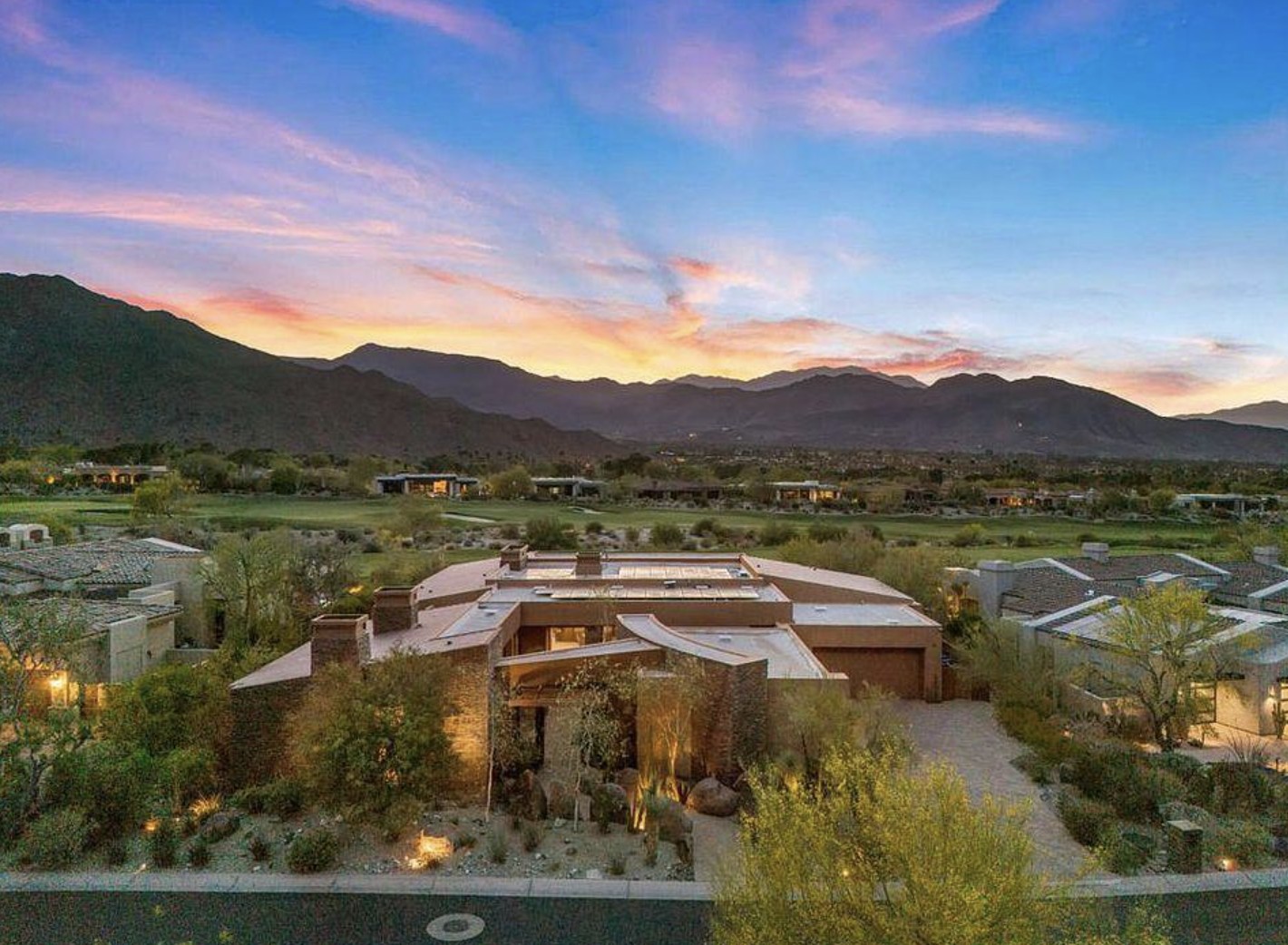
The Reserve was developed around what was already there. Homes sited to work with existing canyons, rock formations, washes and changes in elevation. Street names taken from the terrain rather than a theme: Desert Bloom, Desert Arroyo, Desert Bajada, Hidden Valley.
The consequence for a buyer is that comparables behave differently. At Toscana, vintage predicts a great deal: homes from 2014 onward averaged around $1,029 per square foot against $776 for the 2004 to 2010 stock, a 33 percent premium, and sold in half the time. At The Reserve, every home that traded was built between 1999 and 2011, and the highest price per square foot was achieved by the oldest of them.
At Toscana, ask when it was built. At The Reserve, ask where it sits.
Both questions matter at both clubs. But if you only get one, that is the one to ask.
Membership
Structurally different in a way that affects who can buy and what happens later.
Toscana offers resident and non resident categories, which makes it the more accessible of the two. A buyer can join before deciding where to live, and an owner elsewhere in the Valley can use the club without moving.
The Reserve reserves its resident golf membership as an equity membership available exclusively to homeowners, with the total capped at 250. The club separately offers a non resident Hawk membership and social categories.
That cap is worth understanding. Two hundred and fifty golf members across 780 acres produces a very different experience from a club with two courses and several hundred more, and it is a large part of what buyers are paying for.
Membership categories, initiation, dues, availability and transfer terms are set by each club, are subject to change without notice, and should be confirmed in writing before an offer.
Who each one suits
| Toscana | The Reserve | |
|---|---|---|
| Golf | Two courses, no required tee times, real variety | 21 holes and unusually good practice facilities, but one routing |
| Privacy | Good, within a formally planned community | The point of the place |
| Architecture | Consistent and predictable | Individual, sometimes dramatic, less uniform |
| Choice when buying | Genuine. 22 recent sales | Limited. Wait for the right one |
| Clarity at resale | Strong, from transaction depth | Harder, from scarcity |
| Membership route | Resident or non resident | Own to hold resident golf equity |
Read the full guides: Toscana Country Club · The Reserve
For the third option in the city, Indian Wells Country Club, and how all three compare, see the Toscana guide. For the wider picture, our Indian Wells page.
Frequently asked questions
Which is better, Toscana or The Reserve?
They solve different problems. Toscana is larger and more formally planned, with two Jack Nicklaus Signature courses, around 630 residences and both resident and non resident membership. The Reserve is more intimate and topographically dramatic, developed across 780 acres around native terrain, with a 21 hole Weiskopf and Morrish course and golf membership capped at 250. Buyers generally choose The Reserve for privacy and architectural individuality, and Toscana for golf variety and a more conventional club environment.
Which is more expensive?
Toscana, on median closed price. Over the six months to August 4, 2026 the median at Toscana was $4,025,000 against $3,082,500 at The Reserve. Per square foot the gap narrows considerably: $897 against $881. Toscana's higher median largely reflects what has been trading rather than a higher rate per foot.
Which has more inventory?
The Reserve, proportionally. Toscana recorded 22 sales in six months against five active listings, roughly a month and a half of supply. The Reserve recorded six against six, about six months. A buyer at Toscana chooses between homes; a buyer at The Reserve usually waits for the right one.
Do I have to own a home to join either club?
At The Reserve, resident golf membership is an equity membership available exclusively to homeowners, though the club separately offers a non resident Hawk membership and social categories. Toscana offers both resident and non resident categories, which makes it the more accessible of the two in membership terms. Confirm current availability and terms directly with each club.
Does vintage matter at both?
At Toscana considerably. Homes built from 2014 onward averaged around $1,029 per square foot against $776 for the 2004 to 2010 stock, and sold in half the time. At The Reserve it cannot be tested on recent data, because every home that traded was built between 1999 and 2011. What the figures there do show is that the highest price per square foot was achieved by the oldest home in the set, which suggests position matters more than age.
Which is better for a second home?
Both work, and the deciding factor is usually how you want the property to feel rather than how you will use it. Toscana's scale and formal planning make it predictable and easy to be away from. The Reserve's individually sited homes offer more privacy and character and slightly less uniformity. Toscana's deeper transaction volume also means a clearer picture of value at resale.
Comparing two communities properly
A page can tell you how two clubs differ. It cannot tell you which suits you, because that depends on how you want a week here to feel rather than on any figure in the table above.
We are glad to walk both with you, and to say honestly which one we think fits.
Last updated: August 10, 2026
Laurie McLennan, The McLennan Team at Desert Sotheby’s International Realty
California DRE #01424382 · Market figures from GPS MLS and CRMLS, retrieved August 4, 2026. Club terms are set by each club and should be confirmed directly.