



How to Evaluate a La Quinta Golf Community Before You Buy
Most buyers who find their way to La Quinta arrive with a general idea: a golf community, great weather, the resort lifestyle they've been picturing for years. What very few of them arrive with is a clear framework for evaluating which of those communities is actually the right one for how they want to live.
This matters because the differences between La Quinta's major golf communities — PGA West, The Hideaway, The Madison Club, Tradition, Mountain View Country Club — are not cosmetic. They are structural. They involve meaningfully different HOA frameworks, completely different membership models, different social cultures, different price trajectories, and very different answers to the question of what daily life looks and feels like once you're inside the gates.
A buyer who chooses the right community for their lifestyle and budget will build equity and a life they genuinely love here. A buyer who chose quickly, based on the first showing that felt exciting, may find themselves in the wrong community for how they actually spend their time — and that is an expensive mistake to undo in any market, but especially in a luxury market where properties take time to move.
Here are the questions that matter. Most buyers never think to ask them.
Question 1: What Does Membership Actually Cost — and What Does It Cover?
Membership structure is the single most misunderstood aspect of buying in a La Quinta golf community, and the confusion is structural: HOA dues, club membership fees, and initiation costs are three entirely different financial commitments that are billed separately, governed separately, and negotiated (or not) at different stages of the buying process.
At PGA West, membership is optional and available at multiple tiers — a social-only Champions membership, a six-course Golf membership, and the top-tier Distinguished Desert membership that adds The Citrus Club and all nine courses. Membership is not invitation-only; any homeowner can pursue it through the club.
At The Hideaway, membership is invitation-only and capped at 290 golf members. It is not available through a menu — it requires sponsorship from existing members and approval by the club, which means the membership conversation must begin before or during the purchase process, not after.
At The Madison Club, membership is included with ownership but the initiation and annual dues are among the most substantial in the Coachella Valley — historically in the range of $500,000 initiation and $85,000 annually in golf dues. The price of entry reflects a Tom Fazio course, a level of service and privacy that has few true comparators in the desert, and an ownership structure limited to 225 properties.
The right question is not simply "how much does membership cost?" It is: "Does the membership model at this community match how often I plan to golf, how I want my club relationship to work, and what I want my total monthly ownership cost to be?"
Question 2: What Is the HOA Actually Covering — and What Isn't It?
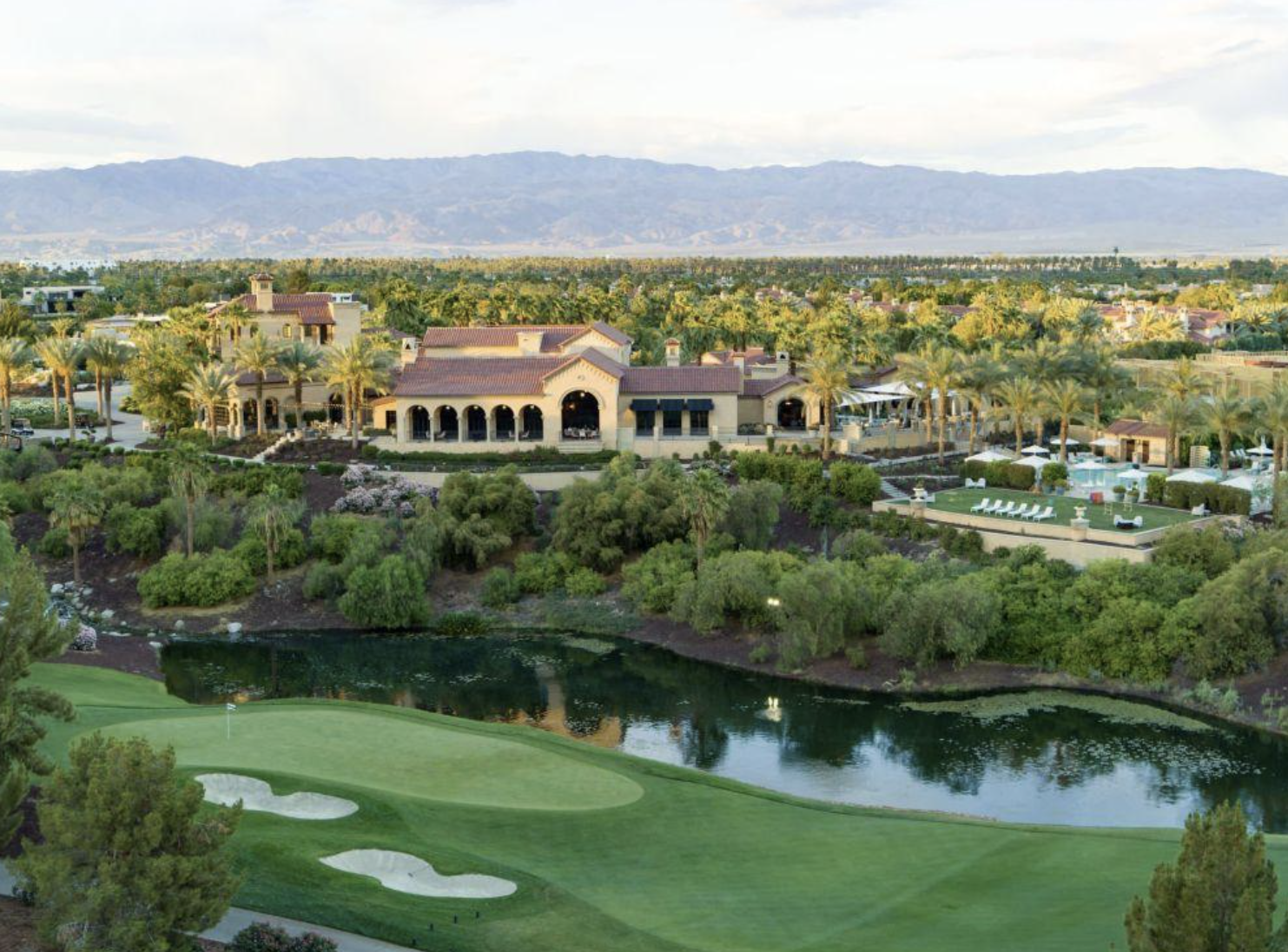
HOA dues in La Quinta golf communities range from a few hundred dollars a month at some sub-associations within PGA West to over $2,000 a month at Madison Club, and what those dues cover varies enormously.
At the high end of the HOA range, dues typically cover extensive landscaping maintenance, exterior upkeep, security, shared amenities, and often utilities, internet, and cable — reducing the ongoing management burden for owners who are not full-time residents. At the lower end, dues may cover only master association security and common area maintenance, leaving the homeowner responsible for individual landscape, exterior maintenance, and all utilities.
Understanding exactly what your specific sub-community's HOA covers is not a detail to sort out at closing. It is a foundational part of evaluating the true total cost of ownership at any given property, and it requires reading the CC&Rs and the reserve study — not just asking the listing agent.
Reserve study health is the detail that separates experienced buyers from first-timers. A reserve study that shows a community is underfunded relative to its deferred maintenance obligations is a yellow flag that can become expensive for owners if a special assessment follows.

Question 3: What Is the Social Culture Like — and Does It Match How You Intend to Live?
This is the question buyers are often embarrassed to ask directly, but it is frequently the most important one. Golf communities have social cultures as distinct as their architectural styles, and landing in the wrong culture is the fastest path to buyer's regret at any price point.
PGA West is large-scale and resort-adjacent. It supports full-time residents, seasonal snowbirds, and vacation rental owners simultaneously. The social calendar is robust but the sheer size of the community means the intimacy that some buyers want is harder to find without actively seeking it through club membership and consistent participation.
The Hideaway is famously social, warm, and deliberately small. With fewer than 300 golf members, everybody knows everybody. If you want to feel genuinely embedded in a community quickly, and you enjoy the kind of social life that revolves around a clubhouse that knows your name, The Hideaway consistently delivers that in a way larger communities simply cannot.
The Madison Club is intimate in a different direction. Privacy is the primary design value — a community sought specifically by people who want to coexist with neighbors they trust and respect without being visible to the broader world. The social culture is real and engaged, but it operates on different terms than a community like The Hideaway.
Question 4: What Does the Rental Landscape Look Like?
If you are purchasing a desert second home with any intention of generating rental income when you are not in residence, the community's rental policies matter as much as the home itself.
Short-term rental regulations in La Quinta have become progressively more structured. Some HOAs limit or prohibit short-term rentals entirely. Others permit them but with registration, permit, and noise compliance requirements. PGA West's various sub-communities have different policies — some condo associations within the community have strong vacation rental histories; others have restricted them.
The Hideaway and Madison Club are not communities oriented around vacation rental income — the membership model, the privacy culture, and the HOA structure all point toward owner-occupant or seasonal use rather than transient rental activity.
Knowing which communities support your intended use pattern — full-time, seasonal, rental-generating, or some combination — before you tour is the difference between a focused showing schedule and a series of exciting visits that don't produce a decision.
Question 5: How Does the Community's Price History Compare to Its Neighbors?
Value in La Quinta's golf communities is not uniform. Different communities have different price trajectories, different inventory depths, and different buyer pools — which means different resale dynamics when the time comes.
Madison Club's ultra-luxury tier has shown continued strength even in a broader market that has softened, with confirmed closings in late 2025 and early 2026 ranging from $12 million to $16.5 million. That segment behaves differently than the broader La Quinta market because its buyer pool has less interest-rate sensitivity and is less reactive to headline market noise.
PGA West's wide price range — from sub-$500,000 condos to custom estate-level detached homes — means the community's aggregate pricing story is complicated. The right comparison is always sub-community to sub-community, not the PGA West address as a whole.
The Hideaway's small inventory means individual sales move the averages meaningfully, which requires looking at a longer history than a single year to form a reliable picture of value trajectory.
Understanding how a community has priced historically — and why — is not something a listing sheet delivers. It requires someone who has watched these communities transact over years.
The Bottom Line
The buyer who arrives in La Quinta with these questions already formed, ready to compare answers across communities, will make a better decision and spend less time in the process than the buyer who starts with showings and works backward toward understanding. The communities here are genuinely exceptional. The right one for you is the one that matches how you actually want to live — not the one that felt most impressive on a Tuesday afternoon in January.

Ready to work through these questions for your specific situation? Let's have a real conversation before you tour anything. Contact us today!